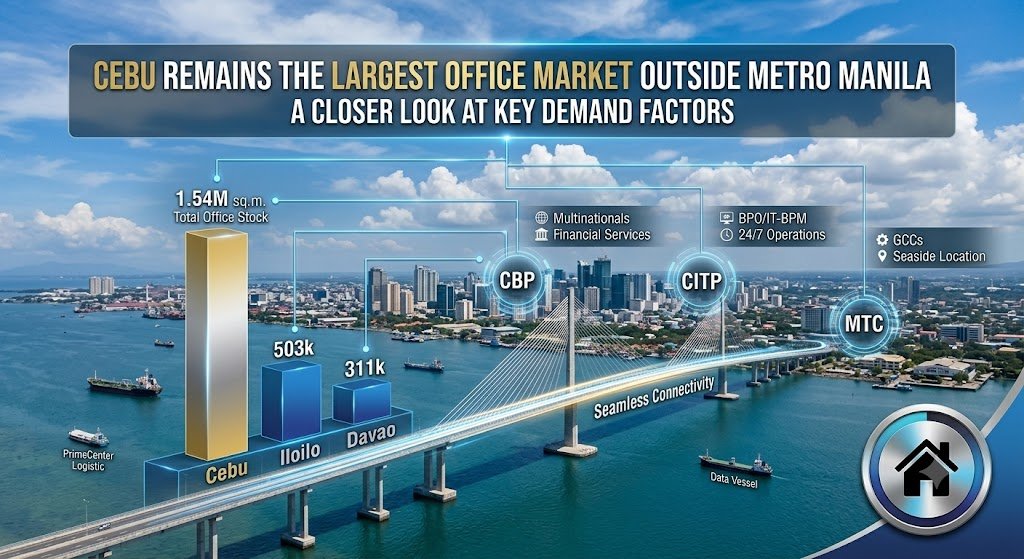
CEBU CITY, Philippines — In the rapidly evolving landscape of Philippine real estate, a familiar name continues to anchor the country’s regional growth. Despite intensifying competition from aggressive upstart hubs across the archipelago, Metro Cebu firmly retains its status as the largest and most vital commercial office market outside Metro Manila.
According to the latest industry reports from property consultancy giant Colliers Philippines, Cebu remains the premier destination for global occupiers, corporate expansions, and outsourcing giants looking to scale beyond the capital region.
The Blueprint of Dominance
Cebu's real estate strength isn't built on speculation; it is anchored by raw volume, mature infrastructure, and a highly skilled, deep labor pool. The market's twin economic powerhouses tell the story:
Cebu Business Park (CBP): The financial heart of the region, offering high-end corporate addresses and a premium, fully integrated urban environment.
Cebu IT Park (CITP): The tech-centric ecosystem pulsing with 24/7 outsourcing activity and modern, world-class Grade A facilities.
Together, these core districts command the vast majority of Cebu's office inventory. While a temporary supply tightening in these prime zones has allowed quick-moving hubs like Iloilo to capture short-term transaction headlines in early 2026, the macroeconomic reality remains clear: Cebu is the only provincial market with the scale to support continuous, multi-thousand-seat corporate expansions.
The Power of the Integrated Ecosystem
A significant factor driving Cebu’s sustained dominance is the shift toward fully integrated communities. Modern enterprises no longer look for isolated desk space; they require seamless lifestyle, retail, and operational ecosystems.
This is precisely where forward-thinking property networks like PrimeCenter focus their attention. By emphasizing unified infrastructure, tech-ready facilities, and master-planned layouts, Cebu ensures that arriving businesses achieve long-term viability from day one.
The current market is shaped by three unmistakable trends:
The Rise of Flex Spaces: With traditional spaces tightening, flexible plug-and-play and seat-leasing models are thriving. This provides rapid scalability for expanding businesses without massive, immediate capital expenditures.
Flight to Quality: Global Capability Centers (GCCs) and multinational shared services are consistently choosing premium, sustainable corporate towers that boast green building certifications and modernized infrastructure.
The Multi-Sector Ripple Effect: Cebu's commercial appetite is feeding its residential market. Along with Davao, Cebu is projected to capture over 60% of the massive 45,000 new condominium units arriving across the Visayas-Mindanao corridor over the next three years.
Looking Toward 2029
As options in the core business districts become highly coveted, developers are already adapting by unlocking alternative premium zones in Mandaue and the Reclamation Area. This strategic expansion ensures a healthy pipeline of modern, cost-efficient spaces for the next wave of global tenants.
For international occupiers, traditional corporate headquarters, and high-value tech firms alike, Metro Cebu doesn't just offer space—it offers the most practical, stable, and highly scalable business ecosystem in the provincial Philippines. The Queen City of the South is nowhere near giving up its crown.
 PrimeCenter
Market Trends
PrimeCenter
Market Trends
Cebu Anchors VisMin Growth: Remains the Largest Office Market Outside Metro Manila
PrimeCenter Market Desk
PrimeCenter
Want the Full Picture?
Talk to a licensed PrimeCenter coordinator about this update and what it means for your investment plans.
+63 917 725 0318 info@ceboom.comPrimeCenter | Licensed Real Estate Broker PRC 01731